
Crypto prices can change within seconds. While some investors hold cryptocurrencies for months, others look for much shorter trading opportunities. These active traders are often called scalpers.
What is a scalper? A scalper is a trader who buys and sells assets quickly to try to benefit from small price movements. In crypto trading, scalpers study short-term charts, use technical indicators, and plan entry and exit levels before placing trades.
Scalping can involve frequent transactions, which means trading fees, spreads, and execution speed matter. Even a small unexpected price change can affect the result.
This guide explains how crypto scalping works, the strategies traders use, how to evaluate crypto trading signals, and the risks beginners should understand.
What Is a Scalper in Crypto Trading?
The scalper meaning in trading refers to someone who attempts to capture small price movements over short periods.
Scalpers often focus on actively traded cryptocurrencies such as Bitcoin and Ethereum. Unlike long-term investors, they usually close positions within minutes rather than waiting for a large price trend.
For example, a trader might enter a Bitcoin position after a short-term breakout and exit when the price reaches a nearby target.
The Investopedia explanation of scalping describes this approach as trading small price changes through frequent transactions.
Scalping requires more than fast buying and selling. Traders also need to understand volatility, order execution, and the costs of each trade.
How Does Crypto Scalping Work?
Crypto scalpers analyse recent price movements to identify possible buying or selling opportunities.
A typical process involves choosing an actively traded cryptocurrency, studying the short-term trend, waiting for a setup, and planning the exit.
Choose a Liquid Cryptocurrency
Liquidity describes how easily an asset can be bought or sold without causing a large change in its price.
Scalpers often prefer active markets because weak liquidity may produce wider spreads and unexpected execution prices.
However, even liquid cryptocurrencies can experience sudden volatility.
Analyse Short-Term Price Movements
Scalpers commonly study short-term candlestick charts.
They may watch moving averages, support and resistance, price breakouts, and trading volume.
A short-term upward trend might suggest buying interest, while a sideways market may require a different approach.
No indicator can predict every price movement.
Confirm the Trading Setup
Before entering, the trader looks for evidence supporting the setup.
For example, a breakout above resistance may appear stronger when trading activity increases.
Still, the price can return below resistance. A setup is a possibility, not a guarantee.What Is a Scalper Trade? A Bitcoin Example
Let’s understand how a scalper trade works with a simple Bitcoin example.
Imagine a trader identifies an upward price movement in Bitcoin and plans to buy BTC/USDT at $100,000.
The trader sets a stop-loss level to manage potential losses and a take-profit target to plan the exit.
Example of a Bitcoin Scalping Trade
| Trading Details | Example |
|---|---|
| Trading Pair | BTC/USDT |
| Entry Price | $100,000 |
| Stop Loss | $99,900 |
| Take Profit | $100,200 |
| Planned Price Risk | $100 per BTC |
| Planned Price Reward | $200 per BTC |
| Risk-to-Reward Ratio | 1:2 |
How Does This Scalper Trade Work?
1. Entry Price: The trader plans to buy Bitcoin at $100,000 after identifying a potential upward movement.
2. Stop Loss: The stop loss is set at $99,900. If Bitcoin moves against the trade and the stop executes at the planned price, the loss would be $100 per BTC, excluding trading costs.
3. Take Profit: The take-profit target is $100,200. If Bitcoin reaches this level and the position closes at that price, the gain would be $200 per BTC, before trading costs.
4. Risk-to-Reward Ratio: The planned risk-to-reward ratio is 1:2. This means the potential price reward is twice the planned price risk.
Why Is Risk Management Important in Scalping?
A scalper should identify the entry price, stop-loss level, and take-profit target before opening a trade.
However, the actual profit or loss depends on position size, trading fees, spreads, slippage, and order execution. A stop-loss order may execute at a different price during sudden market movements.
Key Takeaway: This Bitcoin scalping example shows how traders can plan their entries and exits while managing potential risks. A clear trading plan is important, but it cannot guarantee profitable results.
How Do Fees, Spread and Slippage Affect Scalping?
Trading costs are especially important when the expected price movement is small.
Trading Fees
Exchanges may charge fees when traders buy or sell cryptocurrency.
A scalper placing frequent orders can accumulate significant costs over time.
For example, suppose a trader buys $1,000 worth of cryptocurrency and sells it after the position gains $2 in value.
If the exchange charges $1 on entry and $1 on exit, the trading fees consume the entire $2 gross gain.
This simplified example assumes no additional costs.
Bid-Ask Spread
The spread is the difference between the price buyers are willing to pay and the price sellers are asking.
A trader buying at the ask and selling at the bid may lose value to the spread even when the quoted market price barely changes.
Wider spreads make small price targets more difficult to achieve.
Slippage
Slippage occurs when an order executes at a different price from the one expected.
Suppose a trader plans to buy Bitcoin at $100,000 but receives an average execution price of $100,050.
The difference reduces the potential gain and changes the trade’s original risk calculation.
Slippage can occur during rapid market movements or when available liquidity is limited.
These risks are also discussed in Pepperstone’s scalping risk management guide.
Crypto Scalping Strategies: Common Methods
Different scalping strategies suit different market conditions. Traders should understand how each method works before using it with real money.
Moving Average Scalping
Moving averages help identify the direction of recent price movements.
Some traders compare a faster moving average with a slower one to assess momentum.
A bullish crossover may suggest stronger upward movement, but false signals are common in sideways markets.
Support and Resistance Scalping
Support is an area where buying interest may appear. Resistance is an area where selling pressure may increase.
Scalpers may watch for price reactions near these levels.
For example, a trader might look for a potential buying opportunity near support after signs of renewed demand.
If support breaks, the original trading idea may no longer be valid.
RSI Scalping Strategy
The Relative Strength Index, or RSI, measures recent price momentum.
Traders use it to assess whether a market has experienced strong buying or selling pressure.
An oversold reading does not guarantee that a price will rise. An overbought reading does not guarantee a decline.
RSI should be considered alongside price action and the wider trend.
Breakout Scalping Strategy
A breakout occurs when price moves beyond an established trading range or important level.
A scalper may look for confirmation through price behaviour and trading volume.
However, false breakouts can cause quick losses, especially when traders enter without a planned exit.
The Binance Academy guide to crypto scalping also explores short-term trading methods and their limitations.
How Do Crypto Scalping Signals Work?
Crypto scalping signals are short-term trade ideas based on technical analysis, price action, or other market information.
A signal may suggest a possible direction, entry price, stop-loss level, and profit target.
Understanding these details is important because the market may move before a trader receives or acts on the signal.
How to Read a Scalping Signal
A useful signal should make the proposed trading setup understandable.
Traders should check the cryptocurrency pair, buy or sell direction, suggested entry, stop loss, and take-profit level.
These are also common elements covered in the Elite Crypto Signal guide to crypto trading signals.
The signal should be assessed against the current chart, trading costs, and the amount of risk the trader can accept.
How to Check Whether a Signal Is Still Valid
Imagine receiving a Bitcoin buying signal after the price has already moved well above the suggested entry.
Following it at the new price could change both the potential reward and the planned loss.
Before acting, traders should ask whether the entry is still available, whether the stop loss remains appropriate, and whether the original setup is still supported by market conditions.
Why Signals Cannot Replace Risk Management
A signal does not guarantee that the market will move in the expected direction.
Unexpected news, changing liquidity, or sudden selling pressure can invalidate a setup.
Scalpers should evaluate signals independently and avoid increasing position sizes simply because a trade idea appears convincing.
Which Indicators Do Crypto Scalpers Use?
Scalpers use indicators to understand different aspects of market behaviour.
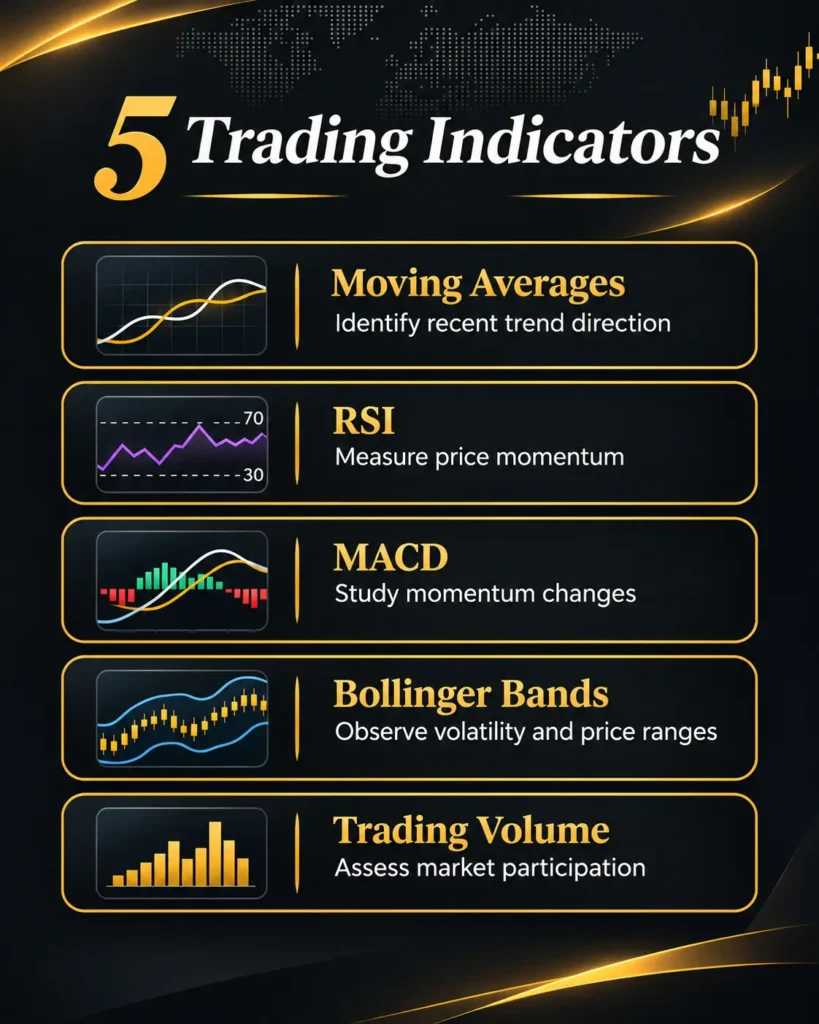
- Moving Averages Identify recent trend direction
- RSI Measure price momentum
- MACD Study momentum changes
- Bollinger Bands Observe volatility and price ranges
- Trading Volume Assess market participation
Using several indicators together does not automatically improve results.
A trader may combine a moving average with RSI and volume, but each indicator should serve a clear purpose.
Too many indicators may create conflicting signals and make decisions harder.
Scalping vs Day Trading: Key Differences
Both scalping and day trading focus on short-term opportunities, but they differ in holding periods and trade frequency.
- FeatureScalpingDay Trading
- Holding Period Often seconds or minutes Often minutes or hours
- Price Target Small movements Larger intraday moves
- Trading Frequency Usually higher Usually lower
- Monitoring Very frequent Frequent
- Trading Costs May accumulate rapidly Depend on activity
- Neither approach is automatically better.
- The right choice depends on available time, experience, trading costs, and tolerance for risk.
What Are the Risks of Crypto Scalping?
- Scalping can expose beginners to several challenges.
- Sudden volatility: Cryptocurrency prices may reverse quickly, even during an established short-term trend.
- Trading costs: Small gains may be reduced or eliminated by fees and spreads.
- Slippage: Orders may execute at unexpected prices during fast market movements.
- Leverage: Borrowed exposure can magnify losses and create liquidation risk.
- Emotional trading: Frequent decisions may encourage impulsive entries or attempts to recover losses.
- Overtrading: Entering too many positions can increase costs and reduce the quality of trading decisions.
- The main goal of risk management is not to eliminate losses. It is to keep potential exposure within limits a trader can accept.
How Can Beginners Manage Scalping Risk?
- Beginners can start by learning how orders work and practising a clearly defined trading process.
- Before opening a trade, identify a possible entry, stop-loss level, and target. Check whether trading fees and the spread make the setup reasonable.
- Choose a manageable position size. A wider stop-loss distance generally requires a smaller position when the intended cash risk remains unchanged.
- Avoid moving a stop farther away simply to delay accepting a loss.
- A trading journal can also help record why a position was opened, how it was managed, and whether the original plan was followed.
- Paper trading allows beginners to practise these decisions without risking real capital, although simulated execution may differ from live trading.
- Elite Crypto Signal’s market education and risk-management approach also highlights the importance of understanding indicators, position sizing, and trading risks.
Crypto Scalping Suitable for Beginners?
- Crypto scalping may be difficult for beginners because it requires frequent attention and quick decisions.
- Small price movements can be affected by fees, spreads, and execution delays. These factors may be less obvious to someone who has only studied chart patterns.
- Beginners should first understand order types, technical analysis, position sizing, and basic risk management.
- Practising with historical charts or a demo environment can help traders evaluate a strategy before considering live trading.
Frequently Asked Questions...
A scalper is a trader who attempts to benefit from small price movements by opening and closing positions over short periods.
Scalpers are short-term crypto traders who study price movements, technical indicators, and possible entry and exit levels.
The term refers to people who use a fast trading approach called scalping. Outside finance, a scalper can have other meanings, such as a ticket reseller.
Yes. Scalping focuses on short-term price changes, while long-term investing generally involves holding assets for much longer periods.
AI-based trading tools may analyse price patterns or generate trade ideas. However, automated analysis can be inaccurate, delayed, or unsuitable for current market conditions.
No. Trading signals identify possible opportunities, but market conditions and execution risks can lead to losses.