AI Vs Human Signals: The Future of Trading Signals
- Home
- June 18, 2026
Related Posts
Need Professional Trading Help?
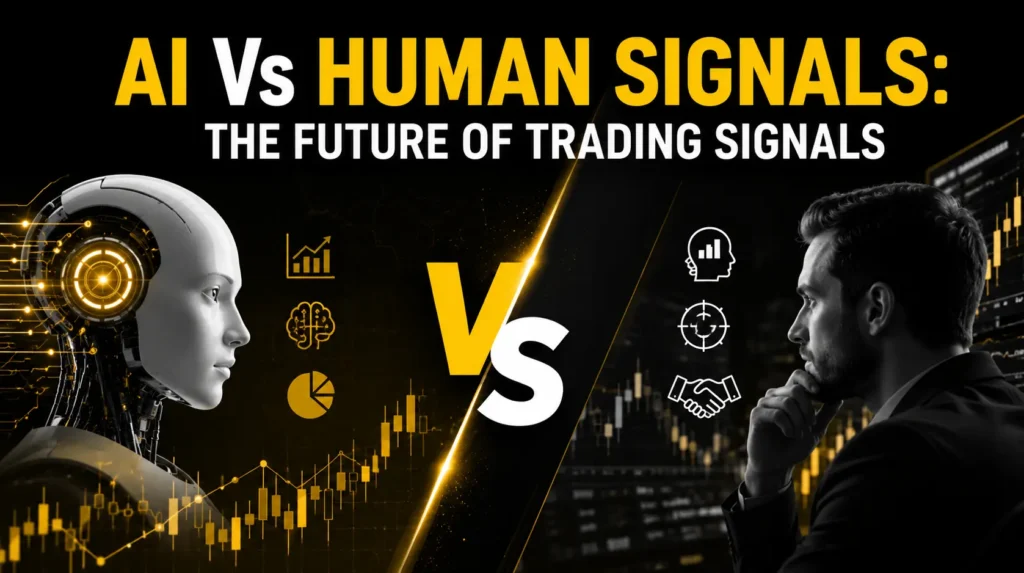
The crypto market in 2026 is moving in a way that few traders could have imagined just a couple of years ago. Price swings happen within minutes, liquidity shifts can change the market direction instantly, and one single event can trigger big moves across several assets at the same time. In that kind of environment, depending only on the old-style market analysis is getting harder and harder.
For years, traders leaned on human analysts to read charts, keep an eye on news, and spot chances before others did. Human expertise still matters, but the market’s complexity is rising so fast that people now want solutions that are quicker and more data-oriented. And that’s where artificial intelligence is sort of changing the whole game.
The most noticeable change in 2026 can be summed up as three words: Data Over Hype.
Rather than reacting to feelings, rumors, or plain guessing, AI-powered systems center on market data you can actually measure. They chew through huge volumes of information in real time, so traders can find opportunities from evidence, not from assumptions.
Let’s look at why AI-based trading signals are showing better results than human analysts in today’s crypto markets.
The Evolution of Trading Signals in 2026
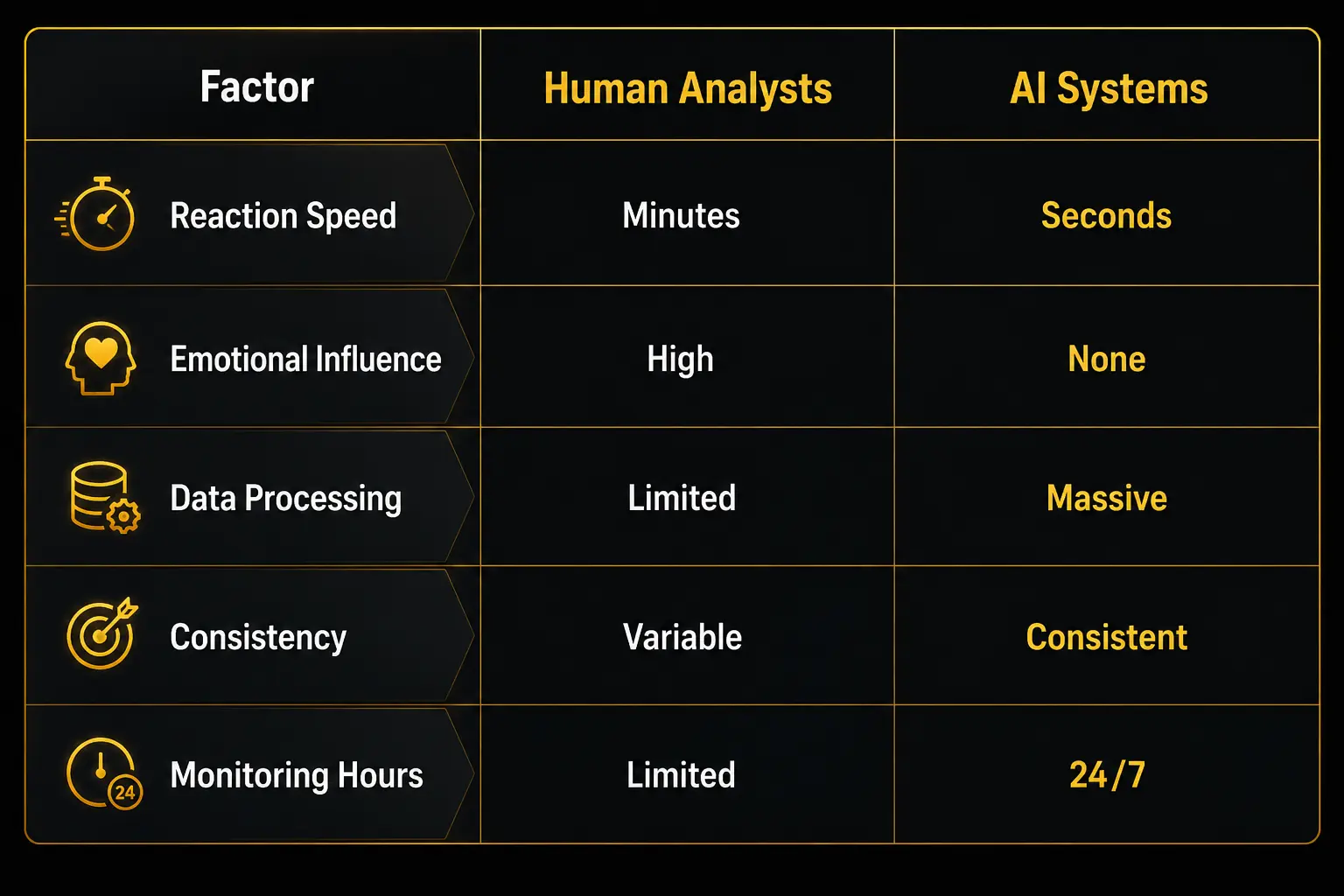
Trading signals have changed a lot over the years. Back then, analysts would manually review price charts, technical readings, and market news before they issued a trade suggestion. That kind of workflow worked okay in slower markets, but the current crypto ecosystem never sleeps, and it generates an insane amount of data every single second.
Human analysts run into a few issues:
- They can’t really process large datasets fast enough
- They get tired of watching markets nonstop
- They react late when sudden moves hit
- They often bring personal bias into decisions, even if they don’t mean to
Artificial intelligence addresses these challenges by continuously analyzing market conditions without interruption. Modern systems can evaluate price action, liquidity movements, order flow, volatility patterns, and market sentiment simultaneously.
This capability has made AI crypto signals 2026 increasingly popular among traders seeking faster and more objective market insights. Rather than relying on a single indicator or personal interpretation, AI combines multiple data sources to generate signals based on statistical probabilities.
As markets become more complex, the ability to process information quickly is becoming a major competitive advantage.
Why Human Analysts Struggle During Extreme Volatility
Volatility brings openings, but it also brings headaches, sort of. In those moments when the market is moving fast, analysts often end up with almost no time at all to sort out the information and then decide.
Imagine one of those real high-volatility situations:
- A large cryptocurrency suddenly breaks out.
- Online discussions ramp up really quickly.
- The trading volume jumps, almost all at once.
- Big investors start moving in or out.
- And the price can shift a lot within just minutes.
In that kind of setup, human analysts may find it hard to stay on top of the new situation, because things change so frequently.
Emotional Decision-Making Creates Delays
Even seasoned professionals can get tugged by emotions, which is kind of annoying but true. Fear can make traders leave too early during downturns. But on the other side, the fear of missing out, (you know, FOMO), can lead people into trades after prices already ran up.
Then there’s confirmation bias. Analysts might latch onto signals that agree with what they already believe about the market, while they gloss over anything that clashes, even if it matters.
AI systems don’t go through that same kind of pressure. They operate from set models and specific data inputs, and they don’t “feel” anything.
How AI Filters Market Noise Better Than Humans
One of the most significant advantages of AI-powered signals is that they can sort out useful info from market noise, cleanly, even when everything feels messy. In other words, instead of getting pulled around by random swings, it finds what actually matters for the moment.
What Is Market Noise?
Market noise means those bits of information that can nudge short-term sentiment, but they dont really tell you anything solid about real market conditions.
You can see it in stuff like:
- Viral rumors spreading on social media
- Headlines that sound serious but are kind of misleading
- Temporary price spikes that dont really “stick”
- Speculative discussions, in threads or chats
- Panic-driven reactions that move fast then fade
A lot of traders end up making calls based on these moments, and then they get stuck with poor outcomes, more often than they expect.
The Data First Approach
AI systems are built to check whether information is actually valid before they output signals. Instead of reacting to a single event, they look at several data points, and then they decide if the environment really supports a trading setup.
So, for example, if a cryptocurrency suddenly pumps up in price, an AI system can review things like:
- Trading volume
- Order book behavior
- Liquidity shifts
- Historical behavior patterns
- Volatility metrics
After that, only if the supporting evidence lines up, the movement gets classified as significant. Otherwise, it gets treated as background noise, more or less.
Noise Filtering During High Volatility
This really matters during turbulent market phases.
AI can figure out whether a breakout is backed by real buying pressure or whether it’s just temporary speculation. It can also catch those false signals that look attractive at first glance, but don’t have the underlying market strength to justify them, and that makes a difference pretty fast.
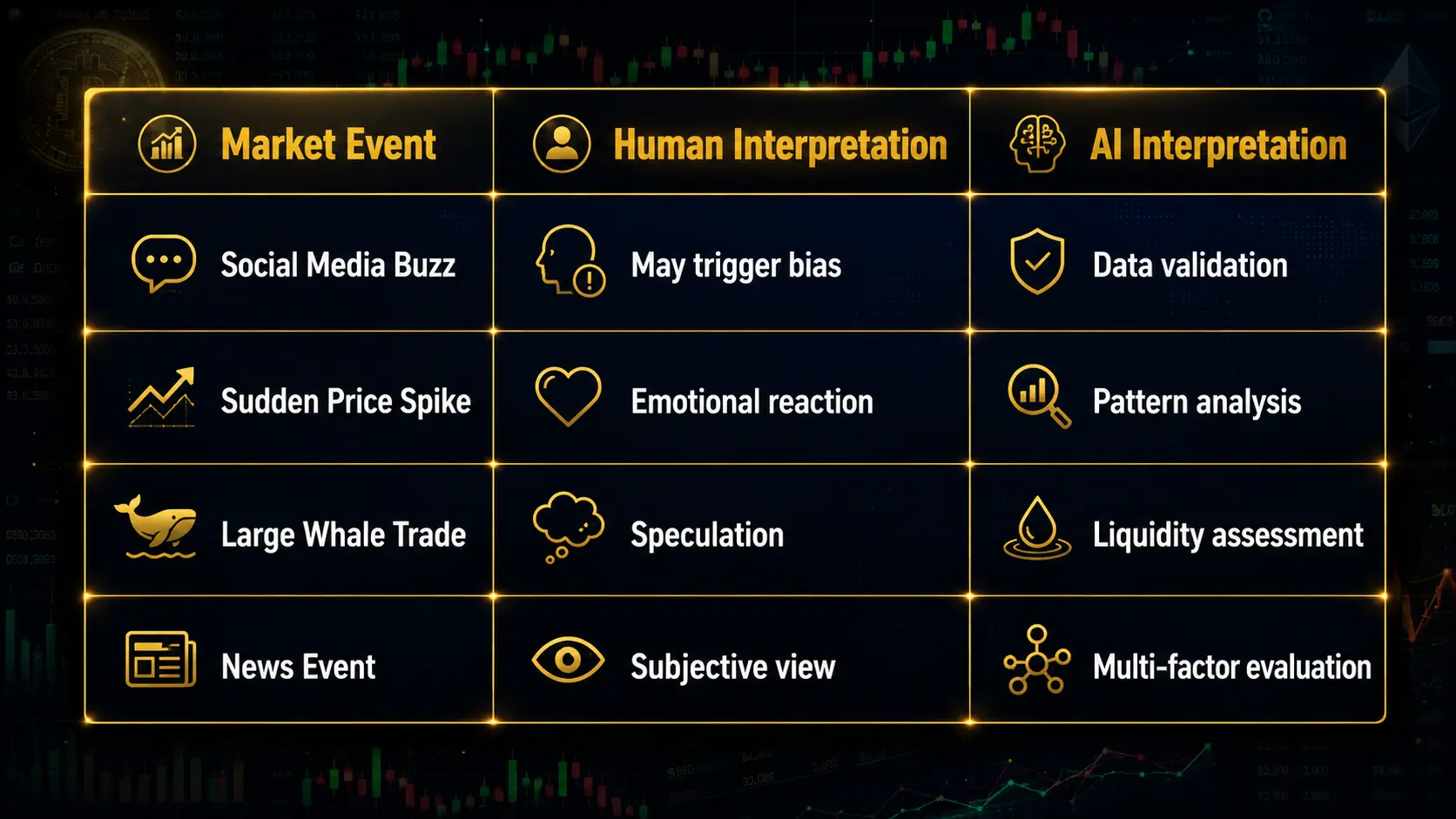
This focus on measurable evidence helps traders avoid unnecessary risks and prioritize higher-probability opportunities.
The Rise of Automated Volume Analysis in 2026
Volume has always been one of the most important indicators in financial markets, even if people don’t always look at it the right way. Still, manually watching volume across multiple assets and exchanges can get messy and time-consuming, especially when you have other stuff running in parallel.
Because of that, automated volume signals have become more and more popular lately.
Why Volume Matters
Volume gives traders a sense of the real force behind what price is doing. Like, a breakout that comes with solid volume is usually treated as more dependable than one that shows up with weak participation.
With the right volume analysis, you can often spot things like:
- Institutional activity
- Accumulation phases
- Distribution zones
- Liquidity shifts
- Breakout confirmations
AI-Powered Volume Detection
Artificial intelligence can keep an eye on volume changes across a lot of assets at once. And it can flag odd behavior long before it becomes obvious to the broader market crowd.
Modern systems typically look at:
- Historical volume trends
- Real-time transaction activity
- Exchange liquidity shifts
- Order flow dynamics
So traders can find leads based on measurable market participation, not just guesses or speculation.
As competition keeps heating up, volume intelligence is turning into one of the clearest edges provided by AI-driven signal platforms, which honestly makes sense.
AI's 24/7 Market Monitoring Advantage
Unlike traditional financial markets, cryptocurrency markets never close.
Opportunities can emerge at any hour of the day, including weekends and holidays.
For human analysts, maintaining continuous market coverage is nearly impossible.
Continuous Market Surveillance
AI systems operate without interruption.
They can simultaneously monitor:
- Multiple exchanges
- Thousands of trading pairs
- Volatility changes
- Market sentiment indicators
- Liquidity conditions
Whenever predefined conditions are met, signals can be generated instantly.
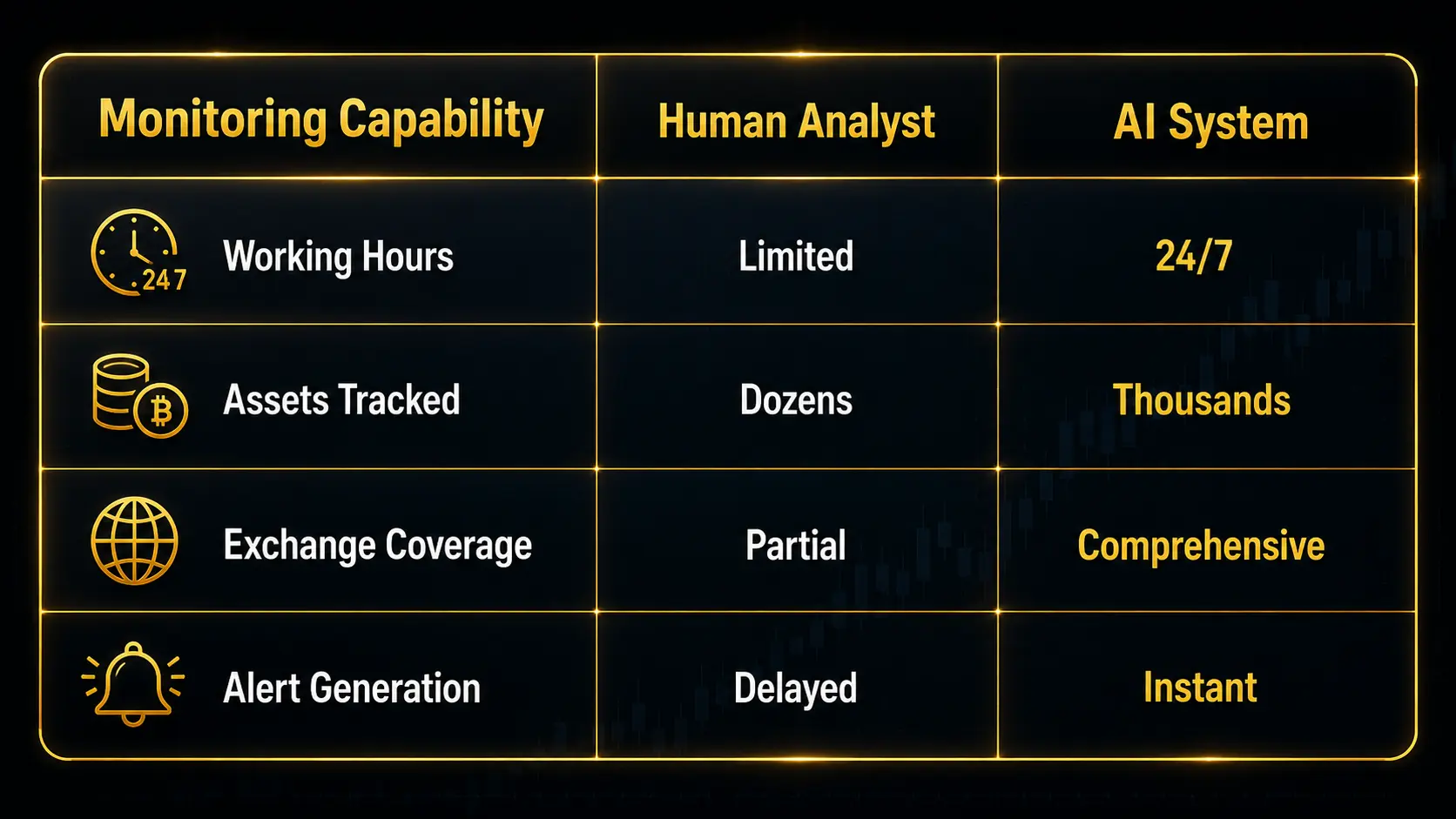
This continuous surveillance helps traders respond to opportunities regardless of when they occur.
In a market that operates around the clock, uninterrupted analysis provides a significant edge.
Accuracy, Consistency, and Scalability: The Winning Formula
One of the reasons AI-based signals keep getting more popular is that they can stay consistent every single time. Human traders… or even experienced ones, tend to swing a bit. Fatigue, emotions, the workload, and even those always-shifting market conditions can push decision-making off track. Meanwhile, AI engines stick to the same analytical structure, like clockwork, even when things feel noisy.
And it’s not just “same inputs, same outputs” either, it’s more like a repeatable decision method that doesn’t quietly drift.
Somewhat Consistent Decision Frameworks
Most modern signal engines use a structured process.
They typically check things like market structure, technical indicators, price behavior, volume activity, and then the volatility conditions too. Every single signal has to meet predefined requirements before it gets sent out.
That level of consistency helps lower uncertainty, and it makes results feel more dependable, rather than random.
Scalability Across Markets
Another big thing is scalability. AI systems can widen their coverage without losing accuracy or speed in practice.
They can analyze, at the same time, Bitcoin and Ethereum, plus altcoins, futures markets, and even cross-exchange opportunities. So traders are not limited to just one venue, or one chart set, and they can watch more potential setups than manual analysis would ever allow, especially when time is tight.
So a lot of people, the ones hunting for the best crypto signals for Binance 2026, increasingly prefer systems that stress consistency, transparency, and objective decision-making. Not subjective “market vibes” or opinions that change by the hour.
And as markets evolve, this kind of scalable, data-driven analysis stops being a nice extra. It becomes a basic requirement, really, not just a competitive advantage.
Are Human Analysts Becoming Obsolete?
Human analysts remain valuable for:
- Strategic planning
- Risk management oversight
- Interpreting broader market developments
- Evaluating long-term trends
Experience and judgment continue to matter.
However, when it comes to processing massive amounts of market data, AI often has a clear advantage.
The Future Is Hybrid
The most effective approach increasingly combines human oversight with AI-powered analysis.
In this model:
- AI handles large-scale data processing.
- AI identifies opportunities.
- Humans evaluate broader strategic considerations.
- Decisions are supported by both technology and expertise.
This combination allows traders to benefit from speed, consistency, and informed judgment simultaneously.
What Traders Should Look for in an AI Signal Provider in 2026
Not all signal providers are created equal. As AI adoption grows, choosing the right platform becomes increasingly important.
Essential Features
A reliable provider should offer:
- Real-time market analysis
- Multi-source data validation
- Volume confirmation systems
- Transparent performance reporting
- Risk management tools
- Fast signal delivery
Red Flags to Avoid
Traders should be cautious of providers that:
- Promise guaranteed profits
- Make unrealistic performance claims
- Depend heavily on hype
- Lack transparency
- Provide a little explanation of the methodology
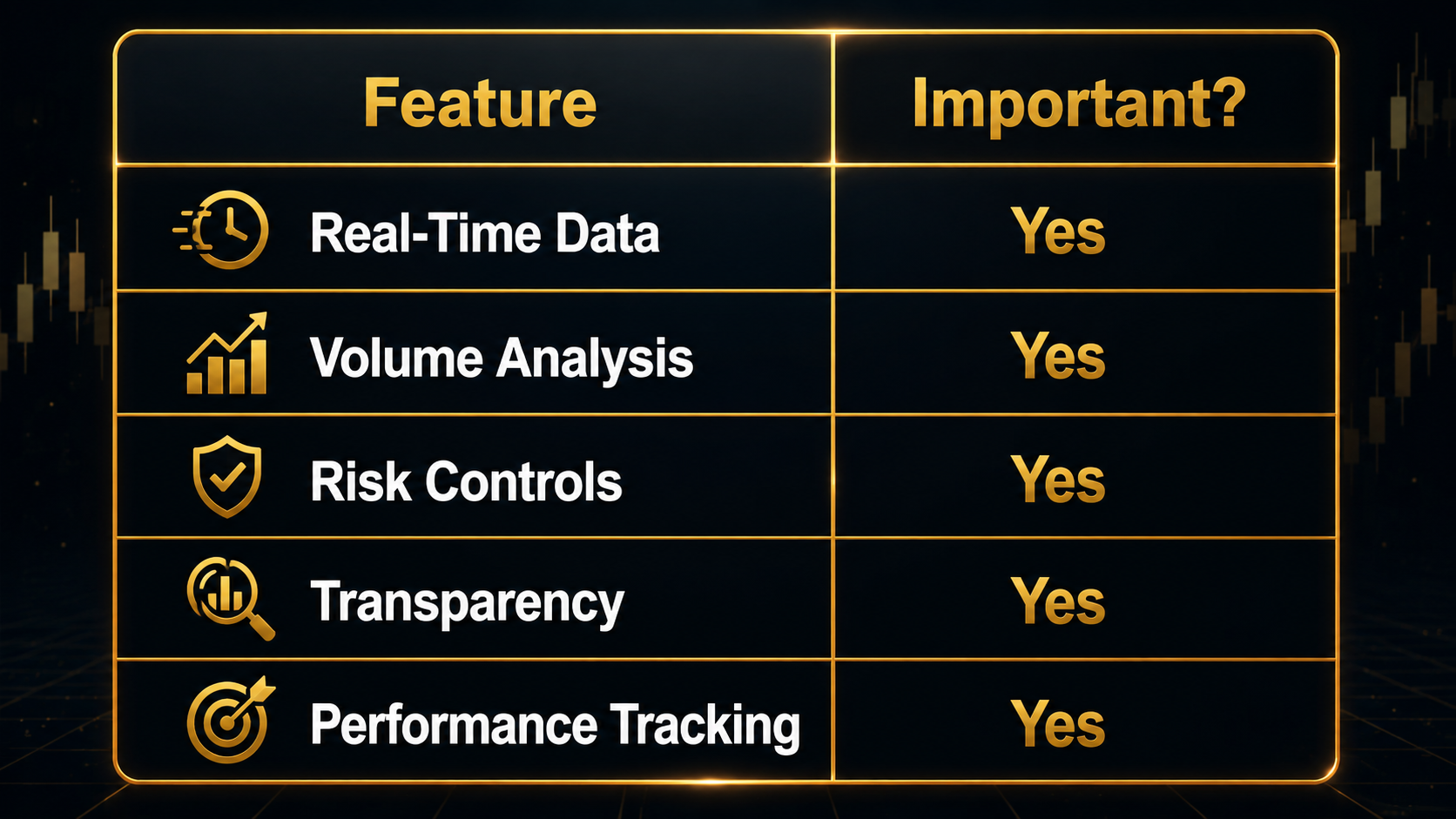
Trustworthy providers focus on measurable performance rather than marketing promises.
Conclusion
In 2026, the crypto market seems to reward speed, accuracy, and data-driven decision making, and honestly, it feels like that. Sure, human analysts still bring useful strategic views, but AI-based systems are now often beating older, more traditional methods in the exact areas that count during live market moments.
They can chew through huge volumes of information, sift away market noise, keep an eye on many assets nonstop, and react immediately when conditions shift. That alone gives them a real edge. And when AI prioritizes data over buzz, traders end up trusting measurable signals more than raw emotional reactions.
As the markets get more competitive and more tangled, signal generation is likely to be shaped by intelligent automation going forward. The traders who adopt automation, but still stick to disciplined risk management, should be better placed to move through the changing crypto world and spot opportunities with a bit more confidence, not just guesswork.
Cut through market noise with AI-powered crypto signals designed for speed, precision, and confidence. Get real-time insights, data-backed opportunities, and stay ahead in 2026’s fast-moving markets.
Cut through market noise with AI-powered crypto signals designed for speed, precision, and confidence. Get real-time insights, data-backed opportunities, and stay ahead in 2026’s fast-moving markets.
FAQ
1. What are AI-powered trading signals?
AI-powered trading signals use artificial intelligence to analyze market data, price movements, volume, and trends in real time, generating trade opportunities based on data-driven insights rather than human judgment.
2. How do AI trading signals differ from human analyst recommendations?
AI trading signals rely on algorithms, real-time data, and automation, while human analysts use experience and interpretation. AI offers faster analysis, consistency, and emotion-free decision-making during volatile markets.
3. Are AI-powered trading signals more accurate than human analysts?
AI-powered signals can identify patterns and process vast datasets quickly, often improving consistency. Accuracy depends on the system’s quality, market conditions, and how effectively risk management is applied.
4. Are AI trading signals suitable for beginners?
Yes, AI trading signals can help beginners identify market opportunities more efficiently. However, users should understand basic trading concepts, risk management principles, and avoid relying solely on signals.
5. What is the future of AI in trading and investing?
AI is expected to play a larger role in market analysis, signal generation, risk assessment, and portfolio management, helping traders make faster, more informed decisions in increasingly complex markets.